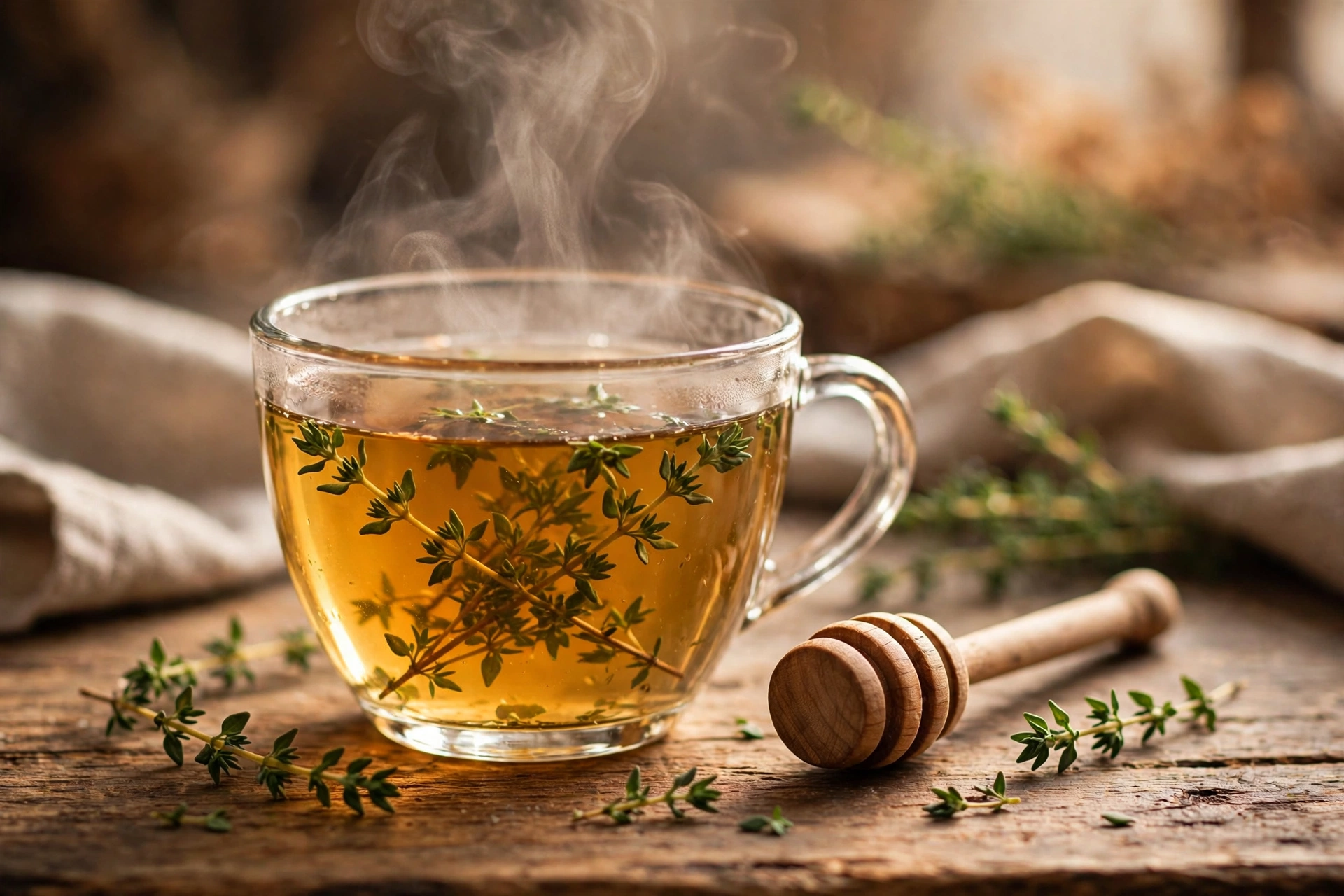
There’s something quietly magical about reaching into your kitchen, grabbing a handful of herbs, and turning them into a warm, fragrant cup of comfort. We usually think of thyme as the humble little herb that seasons roast chicken, simmers into soups, or perfumes a pan of roasted vegetables — but tuck a few sprigs into a teapot and something lovely happens. Thyme tea is one of those simple pleasures that feels like a secret passed between cooks: a calming, aromatic brew made from an herb you probably already have sitting in your fridge or pantry.
If you’re new to herbal teas, thyme tea is a wonderful place to start. Unlike delicate herbal blends that can taste faintly of “hot plant water,” thyme tea has real character. It’s earthy and savory-sweet, with a gentle peppery warmth that settles in the chest as you sip. A squeeze of lemon brightens it; a spoonful of honey rounds it off. The result is a cozy, golden cup that feels equally at home on a slow Sunday morning or a chilly evening when you want to wind down without caffeine.
What makes thyme tea especially worth brewing is how effortlessly it fits into real life. You don’t need a special tea collection, an expensive teapot, or a trip to a health-food store. Fresh thyme from the produce aisle works beautifully, dried thyme from your spice rack works just as well, and the whole thing takes about ten minutes from start to finish. It’s also a lovely way to use up leftover fresh thyme before it wilts — instead of tossing a half-used bunch, you turn it into something soothing.
Thyme has been enjoyed in kitchens and teacups for centuries across the Mediterranean and beyond, where cooks and grandmothers alike have steeped it into simple infusions for comfort. It’s naturally caffeine-free, so you can drink it any time of day — morning, afternoon, or right before bed — without worrying about lying awake at three in the morning counting sheep. And because the base recipe is so simple, it welcomes endless little twists: fresh ginger for extra warmth, mint for a cooling lift, orange peel for a citrusy glow.
Whether you’re a dedicated tea lover looking to expand your herbal horizons or simply curious about what that bundle of thyme in your crisper drawer can do beyond seasoning dinner, this thyme tea recipe will guide you to the perfect cup. Let’s get the kettle on.
Why You’ll Love This Thyme Tea Recipe
- Ready in 10 minutes flat — Five minutes of prep and five minutes of steeping is all it takes to go from sprig to sip.
- Naturally caffeine-free — Enjoy it morning, noon, or night. It won’t keep you up, and it makes a lovely bedtime ritual.
- Made with ingredients you already have — Fresh or dried thyme, water, lemon, and honey. Nothing fancy, nothing to order online.
- Deeply aromatic and comforting — Earthy, slightly peppery, and savory-sweet, with a fragrance that fills the whole kitchen.
- A gentle way to use up leftover thyme — That half-bunch languishing in the fridge? It was destined for this teapot.
- Endlessly customizable — Add ginger for warmth, mint for freshness, or orange peel for a sunny twist.
- Budget-friendly wellness ritual — A bunch of thyme costs far less than a box of specialty tea bags and makes just as many cups.
Recipe at a Glance
Prep time: 5 minutes / Cook time: 5 minutes / Total time: 10 minutes / Servings: 2 cups
Ingredients
- 6–8 fresh thyme sprigs (or 2 teaspoons dried thyme) — Fresh sprigs give the tea a brighter, more garden-like aroma; dried thyme is more concentrated, so you need less. Either works beautifully, so use what you have.
- 2 cups (500 ml) water — Filtered water makes the cleanest-tasting cup, since you don’t want any chlorine notes competing with the delicate herb.
- 1 tablespoon fresh lemon juice (about half a lemon), plus extra slices for serving — Lemon lifts the earthy thyme and adds a sunny brightness. Freshly squeezed tastes noticeably better than bottled.
- 1–2 teaspoons honey, or to taste — Honey softens thyme’s savory edge and pairs wonderfully with its warm notes. Adjust to your own sweetness preference, or skip it entirely.
- Optional: 3–4 thin slices of fresh ginger — Adds a gentle, spicy warmth that complements thyme’s peppery character.
- Optional: a small handful of fresh mint leaves — Brings a cool, refreshing lift that balances the thyme’s earthiness.
- Optional: a strip of orange peel — Lends a sweet citrus aroma that makes the whole cup feel a little more festive.
How to Make Thyme Tea
- Rinse the thyme. Whether you’re using fresh sprigs or dried thyme, start by giving them a quick rinse under cool running water. For fresh sprigs, swish them gently in a bowl of water to wash away any dust or soil, then pat them dry with a clean towel. There’s no need to strip the tiny leaves from the stems — the stems hold plenty of flavor and they’ll be strained out later.
- Bring the water to temperature. Pour 2 cups of water into a small saucepan or kettle and heat it until it’s steaming and just about to bubble — around 200°F (93°C). You want it just below a rolling boil. Water that’s too aggressive can scorch the delicate leaves and give the tea a bitter edge, so take it off the heat the moment you see those first tiny bubbles forming.
- Steep the thyme. Place your fresh thyme sprigs (or dried thyme) into a teapot, a heatproof pitcher, or directly into your favorite mugs. Pour the hot water over the herbs, give them a gentle stir, and let everything steep for 5 minutes. If you prefer a milder cup, taste at 4 minutes; for a deeper, more robust brew, go up to 7 minutes. You’ll know it’s ready when the liquid turns a pale golden color and the kitchen smells like an herb garden.
- Add optional extras. If you’re including ginger, mint, or orange peel, add them right along with the thyme at the start of the steep so their flavors have time to mingle. A gentle press with the back of a spoon halfway through the steeping helps release the essential oils from the ginger and mint.
- Strain the tea. Pour the tea through a fine-mesh strainer into cups, catching all the thyme stems and leaves (and any ginger or mint). If you brewed directly in mugs, a small tea strainer or even a fork will do the job. Discard the spent herbs — they’ve given everything they had.
- Finish with lemon and honey. Stir the fresh lemon juice into the warm tea, then sweeten with honey to taste. Add the honey while the tea is still warm so it dissolves completely. Give it a final gentle stir, garnish with a lemon slice or a fresh thyme sprig if you’re feeling fancy, and serve immediately.
Pro Tips for the Perfect Cup
- Don’t boil the herbs. Thyme is delicate. Water just below boiling extracts its fragrant oils without pulling out harsh, bitter compounds. If you accidentally bring the water to a full boil, let it sit for a minute before pouring.
- Fresh thyme is lovely, dried thyme is mighty. Fresh sprigs deliver a brighter, greener flavor, but dried thyme is more concentrated — that’s why the recipe calls for 2 teaspoons dried versus a generous handful of fresh. Never substitute them one-for-one.
- Crush the leaves gently. Before steeping, lightly bruise fresh thyme sprigs between your palms or press them with the back of a spoon. This wakes up the essential oils and makes for a noticeably more fragrant cup.
- Mind your steep time. Five minutes is the sweet spot. Go much longer than eight minutes and the tea can turn medicinal-tasting, with the thyme’s savory notes overpowering its pleasant warmth.
- Use a covered vessel. Steeping in a covered teapot or mug (a small saucer works as a lid) traps the aromatic steam, keeping all that lovely fragrance in the cup instead of escaping into the air.
- Taste before sweetening. Thyme tea has a natural savory-sweetness of its own. Take a sip plain first — you might find you need less honey than you expected, or none at all.
- Double the batch with ease. Making tea for a crowd? Simply scale the sprigs and water up proportionally and steep in a larger pot. The timing stays exactly the same.
Tasty Variations
- Iced thyme tea. Brew the tea a little stronger (use 8–10 fresh sprigs or a full tablespoon of dried thyme) and let it steep for 6–7 minutes. Strain, stir in the honey while warm, then cool to room temperature and pour over a tall glass of ice with lemon slices and a few mint leaves.
- Thyme-ginger tea. Add 4–5 thin slices of fresh ginger to the thyme before steeping. The ginger’s spicy warmth pairs beautifully with thyme’s earthy depth.
- Thyme-mint tea. Toss in a small handful of fresh mint leaves alongside the thyme for a bright, cooling lift.
- Orange-thyme tea. Add a wide strip of orange peel and a cinnamon stick to the steep for a golden, gently spiced cup.
- Sparkling thyme lemonade. Brew a concentrated batch, strain, sweeten, chill, and mix with sparkling water over ice and lemon.
Storage & Make-Ahead
- In the fridge: Brew as directed, strain, cool, and refrigerate in a sealed jar up to 3 days.
- Reheating: Warm gently without boiling; stir in lemon and honey after reheating.
- Freezing: Freeze cooled, unsweetened tea in ice cube trays up to 2 months.
Frequently Asked Questions
Can I use dried thyme instead of fresh thyme? Absolutely — use about 2 teaspoons of dried thyme for every 6–8 fresh sprigs.
Does thyme tea contain caffeine? No — it is completely caffeine-free.
How often can I drink thyme tea? Most people enjoy a cup or two a day; if pregnant, nursing, or on medication, check with your doctor first.
Can kids drink thyme tea? In small, mild amounts it is generally considered gentle; brew it lighter, skip honey for under-ones, and cool before serving.
Thyme tea is proof that the best recipes don’t need to be complicated. A handful of herbs, a kettle of hot water, and a few minutes of patience — that’s all it takes.