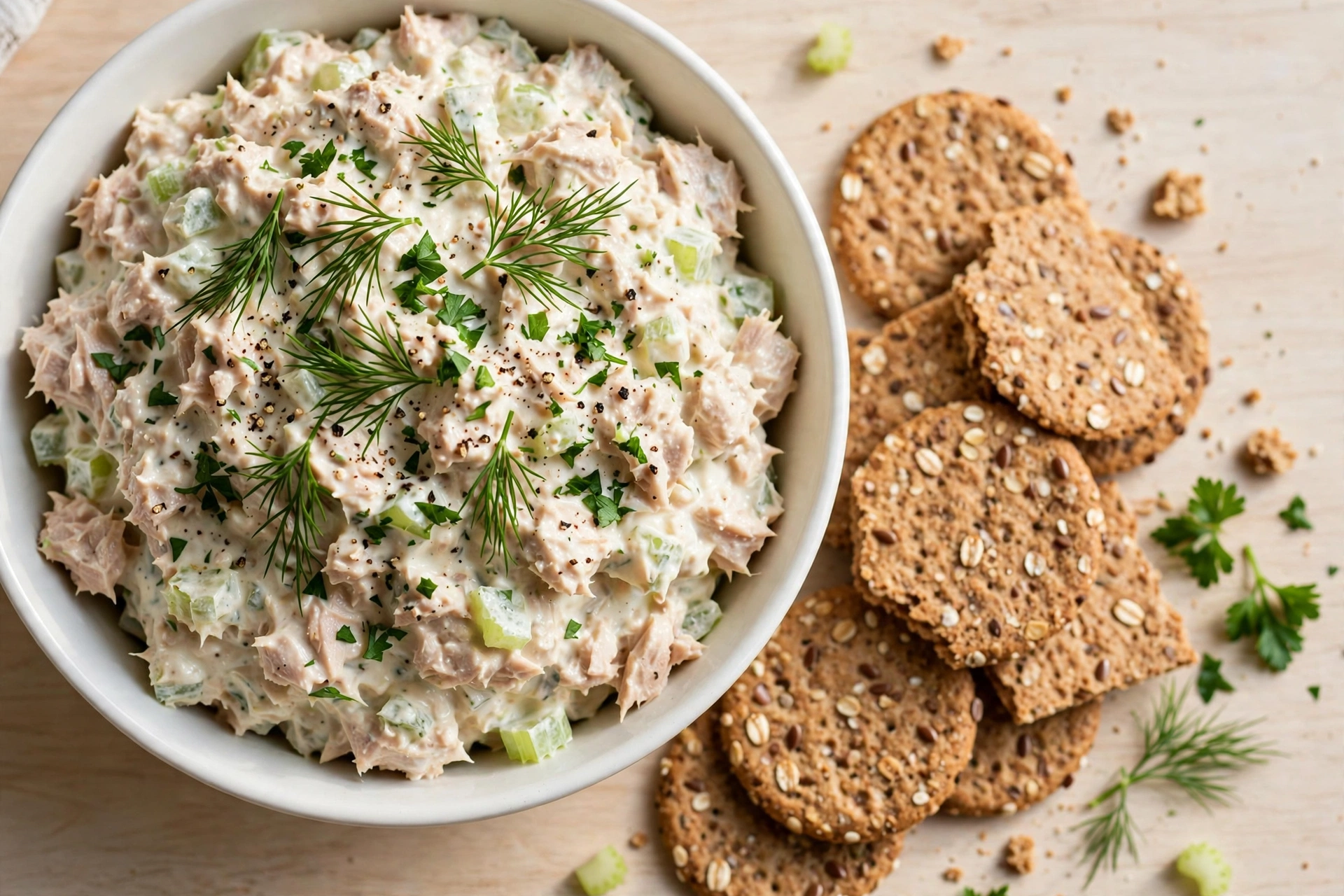
Let us be honest: tuna salad has a reputation problem. For too many of us, the phrase conjures up memories of sad, gray, mayo-drenched scoops from a school cafeteria — bland, mushy, and forgettable. But here is the thing: tuna salad is not the problem. Bad tuna salad is the problem. And this creamy, flavor-packed tuna salad is here to completely rewrite what you think this humble classic can be.
The difference between forgettable tuna salad and the kind people genuinely crave comes down to three things: texture, brightness, and balance. This recipe nails all three. Instead of a one-note mush, you get satisfying crunch from celery and red onion, briny pops from chopped pickles and capers, freshness from herbs, and a dressing that is creamy without being heavy — Greek yogurt lightens the mayonnaise while Dijon and lemon juice cut through the richness with tang. Every bite has contrast, and that contrast is what makes people go back for seconds.
What I love most about this creamy tuna salad is how hard it works. It is a 15-minute, no-cook, high-protein meal prep hero — one batch covers sandwiches for days, stuffs beautifully into wraps and lettuce cups, tops green salads like a pro, and even makes an excellent high-protein snack scooped onto crackers or cucumber rounds. It is budget-friendly, endlessly adaptable, and genuinely delicious cold from the fridge. Whether you are packing lunches, feeding a crowd, or just need dinner in a hurry, this is the tuna salad recipe that will make everyone a believer.
Why You’ll Love This Recipe
- Packed with protein: Each serving delivers over 25 grams of protein, keeping you full and fueled for hours.
- No-cook and 15 minutes: One bowl, one fork, zero stove time — dinner does not get easier than this.
- Crunchy, creamy, tangy: Celery, pickles, and red onion give it texture and brightness that bland tuna salads lack.
- Lighter but still rich: Greek yogurt replaces half the mayo for creaminess with less heaviness.
- Meal-prep champion: Tastes even better the next day, so it is perfect for make-ahead lunches all week.
Ingredients
- 3 cans (5 oz / 142 g each) solid white albacore tuna in water, drained — Albacore has a firmer texture and milder flavor than chunk light. Drain it very well — excess water is the enemy of creamy tuna salad.
- 1/3 cup (75 g) mayonnaise — Use a good-quality mayo; it is the backbone of the dressing. Full-fat gives the best flavor and texture.
- 1/3 cup (80 g) plain Greek yogurt — Adds creaminess and tang while boosting protein and lightening the overall richness. Use full-fat or 2% for the best texture.
- 2 celery stalks, finely diced — The essential crunch. Dice it small so it distributes evenly.
- 1/4 cup finely diced red onion — Sharp, colorful, and aromatic. Soak it in cold water for 5 minutes first if you want to tame the bite.
- 1/4 cup chopped dill pickles, plus 1 tablespoon pickle brine — The brine is a secret weapon: it seasons the salad and adds a tangy depth that plain salt cannot.
- 1 tablespoon capers, roughly chopped (optional but recommended) — Little bursts of briny flavor that elevate the whole salad.
- 1 tablespoon Dijon mustard — Adds a sophisticated sharpness and helps emulsify the dressing.
- 1 tablespoon fresh lemon juice — Brightens everything and keeps the flavors lively.
- 2 tablespoons chopped fresh dill (or 2 teaspoons dried) — Fresh herbs make an enormous difference here.
- 1/2 teaspoon fine salt, plus more to taste — Start here and adjust; the pickles and capers already bring salt.
- 1/4 teaspoon freshly ground black pepper — Freshly ground has noticeably more flavor than pre-ground.
- Optional: A pinch of smoked paprika or a dash of hot sauce for those who like a little kick.
How to Make Creamy Tuna Salad
-
Drain the tuna thoroughly. Open the cans and press the lids down firmly to squeeze out as much water as possible, or drain in a fine-mesh strainer and press with a spoon. This step matters more than any other — watery tuna makes watery salad, no matter how good your dressing is.
-
Flake the tuna. Transfer the drained tuna to a large mixing bowl. Use a fork to break it into bite-sized flakes. Do not mash it into a paste; you want distinct pieces with some texture. A mix of larger flakes and smaller bits gives the best mouthfeel.
-
Mix the dressing. In a small bowl, whisk together the mayonnaise, Greek yogurt, Dijon mustard, lemon juice, pickle brine, salt, and pepper until smooth and creamy. Taste it — it should be tangy, savory, and well-seasoned on its own. Adjust salt and lemon to your liking now, because it is harder to season evenly once mixed with the tuna.
-
Combine. Pour the dressing over the flaked tuna. Add the diced celery, red onion, chopped pickles, capers, and fresh dill. Using a fork or spatula, fold everything together gently until the tuna is evenly coated. Fold, do not stir aggressively — you want to keep those nice flakes intact.
-
Rest and chill. Cover the bowl and refrigerate for at least 30 minutes. This rest is transformative: the flavors meld, the onion softens slightly, and the whole salad becomes more cohesive and delicious. If you can wait an hour, even better.
-
Taste and serve. Give it one final taste and adjust — more lemon for brightness, more salt if it tastes flat, more pickle brine for tang. Serve cold in sandwiches, wraps, lettuce cups, or over greens.
Pro Tips
- Drain, drain, drain. I cannot say this enough: the single biggest upgrade to homemade tuna salad is getting every drop of liquid out of the cans. Press, strain, and even blot with a paper towel if you are feeling thorough.
- Do not overmix. Vigorous stirring turns beautiful flakes into baby food. Fold gently and stop as soon as everything is coated.
- Season the dressing, not the tuna. Tasting and adjusting the dressing before it meets the tuna gives you far more control than trying to fix seasoning at the end.
- The 30-minute chill is mandatory. Freshly mixed tuna salad tastes fine; rested tuna salad tastes great. The difference is real — plan for it.
- Choose your tuna wisely. Solid white albacore in water gives the firmest flakes and cleanest flavor. Oil-packed tuna is richer and delicious too, but drain it just as carefully and reduce the mayo slightly.
Variations
- Mediterranean style: Swap the pickles for chopped Kalamata olives and roasted red peppers, use oregano instead of dill, and add a crumble of feta on top.
- Spicy tuna: Add 1 to 2 tablespoons of sriracha or chopped pickled jalapeños to the dressing, and finish with sliced scallions instead of red onion.
- Curried tuna salad: Replace the Dijon with 1 1/2 teaspoons of curry powder, swap pickles for diced apple and golden raisins, and use cilantro instead of dill. Unexpected and wonderful.
- Avocado tuna: Mash one ripe avocado into the dressing and cut the mayo in half. Creamy, rich in healthy fats, and gorgeous green-flecked color.
- Low-carb lettuce wraps: Skip the bread entirely and serve generous scoops in butter lettuce cups with extra celery sticks and cherry tomatoes on the side.
Storage & Make-Ahead
This tuna salad is a meal-prep dream. Stored in an airtight container in the refrigerator, it keeps beautifully for 3 to 4 days — and honestly, day two is when the flavors peak. The celery stays crisp and the dressing stays creamy; just give it a good stir before serving.
Because it contains mayonnaise and yogurt, do not leave it at room temperature for more than 2 hours (1 hour on a hot day). For packed lunches, use an ice pack. I do not recommend freezing tuna salad — the mayonnaise separates and the celery turns limp upon thawing, and the texture never fully recovers. If you want to prep further ahead, you can mix the dry components (tuna, celery, onion, pickles) and store the dressing separately for up to 2 days, combining them the night before you need it.
FAQs
Can I use tuna in oil instead of water? Yes, and many people prefer it — oil-packed tuna is richer and more flavorful. Drain it just as thoroughly, and consider reducing the mayonnaise by a tablespoon or two since the tuna brings its own richness. The result is a slightly more luxurious salad.
How can I make this tuna salad without mayonnaise? Replace the mayo entirely with additional Greek yogurt, or use mashed avocado for a different kind of creaminess. A mayo-free version made with all Greek yogurt, extra lemon, and plenty of herbs is bright, tangy, and still satisfying — just slightly less rich.
Why does my tuna salad taste bland? Blandness almost always means under-seasoning or skipping the acid. Make sure you are using enough salt, and do not skip the lemon juice and pickle brine — acid is what makes flavors pop. Also check that your tuna was well-drained; excess water dilutes everything.
Is tuna salad healthy? It can be very healthy. Tuna is an excellent source of lean protein and omega-3 fatty acids. This version lightens the traditional recipe with Greek yogurt, cutting calories and adding protein. To keep mercury exposure low, enjoy albacore tuna in moderation (a few times per week) and vary your protein sources across the week.
Creamy, crunchy, tangy, and endlessly versatile — this is the tuna salad that converts skeptics. Make a batch this week, and do not be surprised when it disappears faster than you planned. Some recipes just have that effect on people.