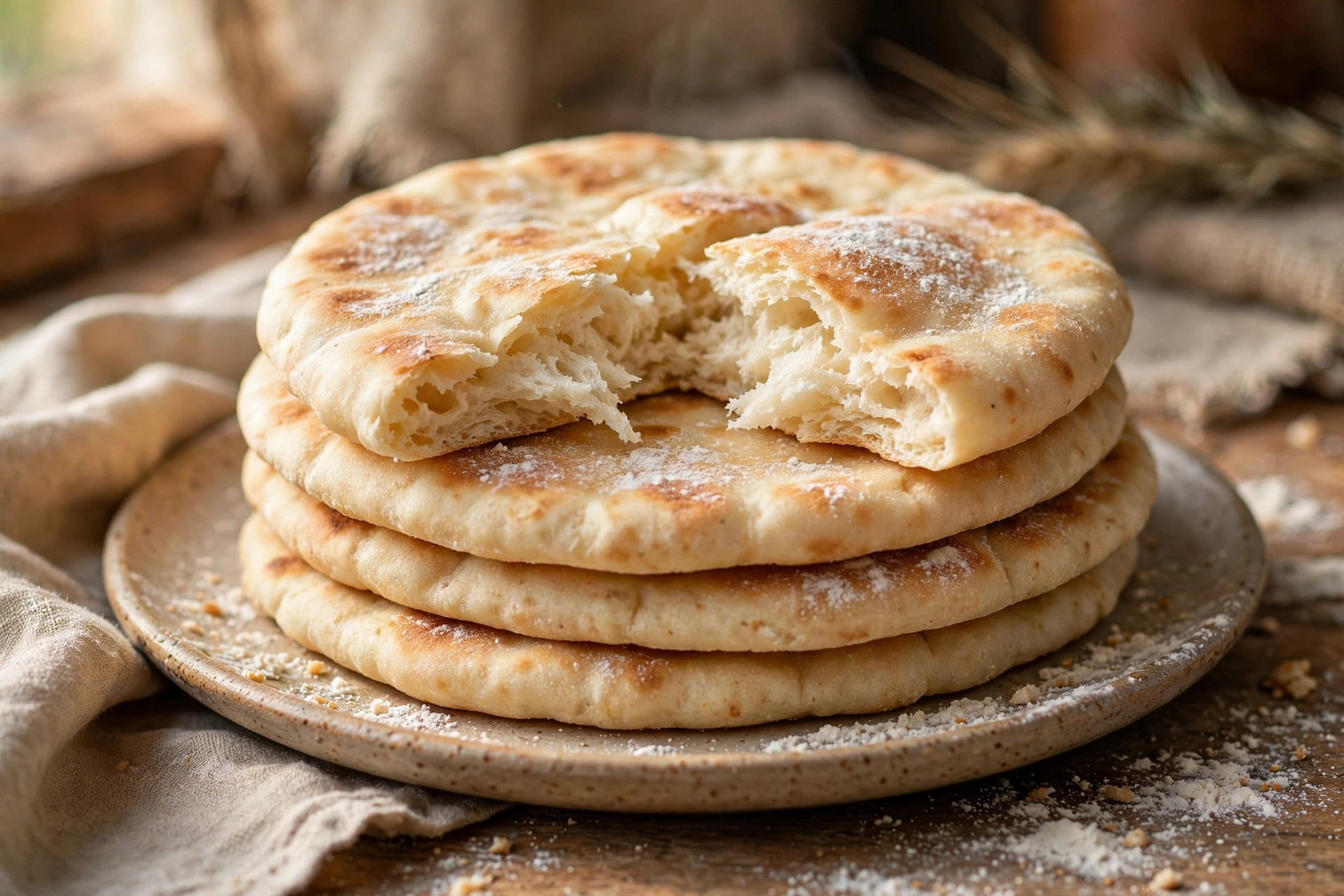
The Flatbread That Changed My Weeknight Dinners
Some recipes earn their place in your kitchen through sheer reliability. This gluten-free flatbread is one of those. No yeast to proof, no hours of rising, no special equipment — just five humble ingredients, one bowl, and a hot skillet. Twenty-five minutes later you have a stack of warm, soft, pliable flatbreads with beautiful golden spots, ready to wrap around fillings, scoop up curry, or disappear one by one while still warm (quality control is important).
If you eat gluten-free, you know the particular sadness of a wrap that cracks the moment you fold it, or store-bought flatbreads with the texture of a yoga mat. This recipe solves both problems at once. The secret is yogurt: it keeps the dough tender and moist, giving you flatbreads that actually bend without breaking. A touch of baking powder provides lift so they puff slightly in the pan, and a slick of olive oil keeps everything supple.
What I love most is how this flatbread shape-shifts through the week. Monday it is garlic-buttered alongside soup. Tuesday it becomes the base for personal pizzas. Wednesday it wraps up leftover chicken and crunchy slaw. It reheats like a dream, freezes beautifully, and — dare I say it — tastes so good that the gluten-eaters in the house will be reaching for it too. Extra easy is right there in the name, and for once, the name does not exaggerate.
Why You Will Love This Recipe
- Only 5 ingredients — flour, baking powder, salt, yogurt, and olive oil. That is the whole list.
- No yeast, no rising — from craving to table in about 25 minutes flat.
- Soft and pliable — actually folds and wraps without cracking, thanks to the yogurt.
- One bowl, one skillet — minimal dishes, maximum reward.
- Endlessly useful — wraps, pizzas, dipping bread, breakfast sandwiches, quesadillas.
- Freezer-friendly — stack with parchment and freeze for instant flatbreads anytime.
Prep: 10 mins | Cook: 15 mins | Total: 25 mins | Servings: 6 flatbreads
Ingredients
- 2 cups (280g) gluten-free all-purpose flour blend — one with xanthan gum included works best for pliability
- 2 teaspoons baking powder — make sure it is fresh and certified gluten-free; this gives the puff
- 1 teaspoon fine salt — seasons the dough all the way through
- 1 cup plain whole-milk Greek yogurt — the tenderness secret; full-fat gives the softest result
- 2 tablespoons olive oil, plus more for cooking — keeps the dough supple and helps browning
- 2 to 4 tablespoons water, as needed — just enough to bring a dry dough together
For serving (optional): melted butter or garlic-infused olive oil for brushing, flaky salt, chopped parsley or cilantro.
How to Make Gluten-Free Flatbread
1. Mix the dry ingredients. In a large bowl, whisk together the gluten-free flour blend, baking powder, and salt. Whisking well now means you will not get any bitter pockets of baking powder later.
2. Add the wet ingredients. Add the Greek yogurt and olive oil to the bowl. Stir with a sturdy spoon until a shaggy dough forms. If the dough looks dry and will not come together, add water one tablespoon at a time — different flour blends absorb liquid differently, so trust the texture, not the exact spoon count. You want a soft, slightly tacky dough that holds together when pressed.
3. Knead briefly and rest. Turn the dough onto a lightly floured surface (use more of the GF blend) and knead gently for about 1 minute, just until smooth. Do not overwork it — gluten-free dough gets tough when overhandled, the opposite of wheat dough. Cover with a clean towel and rest for 10 minutes. This short rest hydrates the flour and makes rolling much easier.
4. Divide and roll. Divide the dough into 6 equal pieces and roll each into a ball. Working with one ball at a time (keep the rest covered so they do not dry out), roll it on a floured surface to about 1/4-inch thickness and roughly 7 to 8 inches across. It does not need to be a perfect circle — rustic is charming. If the edges crack a little, just pinch them back together.
5. Cook in a hot skillet. Heat a large cast-iron skillet or nonstick pan over medium-high heat. Lightly brush with olive oil. Lay in one flatbread and cook for 2 to 3 minutes, until the bottom has golden-brown spots and the surface looks dry with a few bubbles. Flip and cook 1 to 2 minutes more until the second side is spotted and the flatbread puffs slightly. Adjust the heat as needed — too hot and the outside burns before the inside cooks; too cool and you miss the lovely char spots.
6. Keep warm and repeat. Transfer cooked flatbreads to a plate and cover with a clean kitchen towel — the trapped steam keeps them soft and pliable. Repeat with the remaining dough, adding a touch more oil to the pan between flatbreads if needed. Brush the warm flatbreads with garlic butter or olive oil and sprinkle with flaky salt if you like.
Pro Tips for Soft, Pliable Flatbread
- Full-fat yogurt wins. Nonfat yogurt works, but whole-milk Greek yogurt produces noticeably softer, richer flatbreads. The fat is doing real work here.
- Do not skip the rest. Those 10 minutes let the flour fully hydrate, which means less cracking when you roll. If your dough feels stiff, it probably needed the rest — or a spoonful more water.
- Roll evenly. Uneven thickness means thin spots burn while thick spots stay doughy. Aim for a consistent 1/4 inch; a small rolling pin or even a wine bottle works.
- The pan must be properly hot. Test with a drop of water — it should sizzle and evaporate immediately. An underheated pan gives you pale, dry flatbreads instead of spotted, puffy ones.
- Cover as you go. That towel over the finished stack is not optional decoration; the steam is what keeps flatbreads bendy instead of crisp. Stack them as they come off the heat.
- Fix cracks by pinching. If a flatbread cracks while rolling, just press the dough back together with your fingers. Gluten-free dough is forgiving that way.
Tasty Variations
- Garlic naan style: Brush hot flatbreads generously with melted butter mixed with 2 minced garlic cloves and chopped cilantro. Restaurant-style indulgence at home.
- Herbed flatbread: Knead 2 tablespoons of chopped fresh rosemary, thyme, or za’atar into the dough for an aromatic version made for dipping in olive oil.
- Dairy-free: Use a thick, unsweetened coconut or almond-based yogurt. Look for one with minimal added starches so the dough is not gummy.
- Mini pizza bases: Roll the dough slightly thicker (about 1/3 inch), par-cook 1 minute per side, then top with sauce and cheese and finish under the broiler or in a hot oven until bubbly.
- Sweet cinnamon version: Skip the salt, add 2 tablespoons of sugar to the dry mix, and brush finished flatbreads with butter and cinnamon sugar for a dessert flatbread.
- Quesadillas: Fill a half-cooked flatbread with cheese and your favorite fillings, fold, and cook until the cheese melts — the yogurt dough crisps beautifully.
Storage and Make-Ahead Notes
Fresh flatbreads keep at room temperature for 1 day or in the refrigerator for up to 4 days — store them in a zip-top bag with the air pressed out, or wrapped in foil. A 10-second refresh revives them perfectly: warm in a dry skillet, or wrap in a damp paper towel and microwave for 15 seconds.
They freeze beautifully for up to 3 months. Stack cooled flatbreads with squares of parchment paper between them, slide the stack into a freezer bag, and freeze. Reheat straight from frozen in a hot skillet for a minute per side, or microwave under a damp towel. They come back soft and pliable every time.
You can also make the dough ahead: wrap it tightly and refrigerate for up to 24 hours. Let it sit at room temperature for 15 minutes before rolling, since cold dough cracks more easily.
Frequently Asked Questions
Why are my flatbreads stiff instead of soft? Three common causes: the pan was not hot enough, they were rolled too thin, or they were not covered with a towel after cooking. Fix the heat, aim for 1/4-inch thickness, and trap that steam.
Can I make these without yogurt? The yogurt is pretty central to the texture, but a thick dairy-free yogurt works as a 1:1 swap. In a real pinch, sour cream thinned with a tablespoon of milk works too.
My dough is cracking when I roll it. Help? The dough is too dry. Work in water a teaspoon at a time until soft and pliable. Make sure you rested the dough the full 10 minutes and keep unused dough balls covered.
Can I cook these on a grill or in the oven instead? Yes to both. Grill: 2 minutes per side on oiled grates over medium-high heat. Oven: 475 F (245 C) on a pizza stone for 4 to 5 minutes. The skillet remains the easiest method.
Wrap It Up
Five ingredients, one skillet, twenty-five minutes — and a stack of soft, warm flatbreads that make everything from Tuesday tacos to Sunday curry better. This is the kind of recipe that quietly becomes a household staple. Go ahead and double the batch. You will thank yourself on Wednesday.